Male ego: Why the thing that built your success can quietly wreck it (Men's Therapy Podcast)
Watch Full episode:
Episode Description:
There’s a pattern Coach Kevin Voisin keeps running into with his highest-performing clients: guys who can build a hundred-million-dollar business without blinking, then go home and have no idea how to navigate a conversation with their wife. The gap between those two skill sets, he says, comes down to the male ego, the same mental tool that sharpens ambition and decision-making early in life, but which, left unexamined, quietly hardens into a kind of prison most successful men don’t even know they’re living inside.
On this episode of the Men’s Therapy Podcast, Marc Azoulay sits down with Kevin Voisin, who coaches high-performing men and executives through his Live Legend system. He’s spoken on five continents about helping driven men get out of their own way, and he’s currently building an app to bring that work to more people at scale. The conversation ranges from psychology to biology to a few unconventional teachers along the way, a study on cuttlefish mating behaviour, a season of the Netflix survival show Alone, a story about pushing his son’s shoulder instead of spanking him, but it keeps circling back to one idea: ego, in the beginning, is what lets a man become someone. Left unchecked, it’s what keeps him from becoming anyone else.
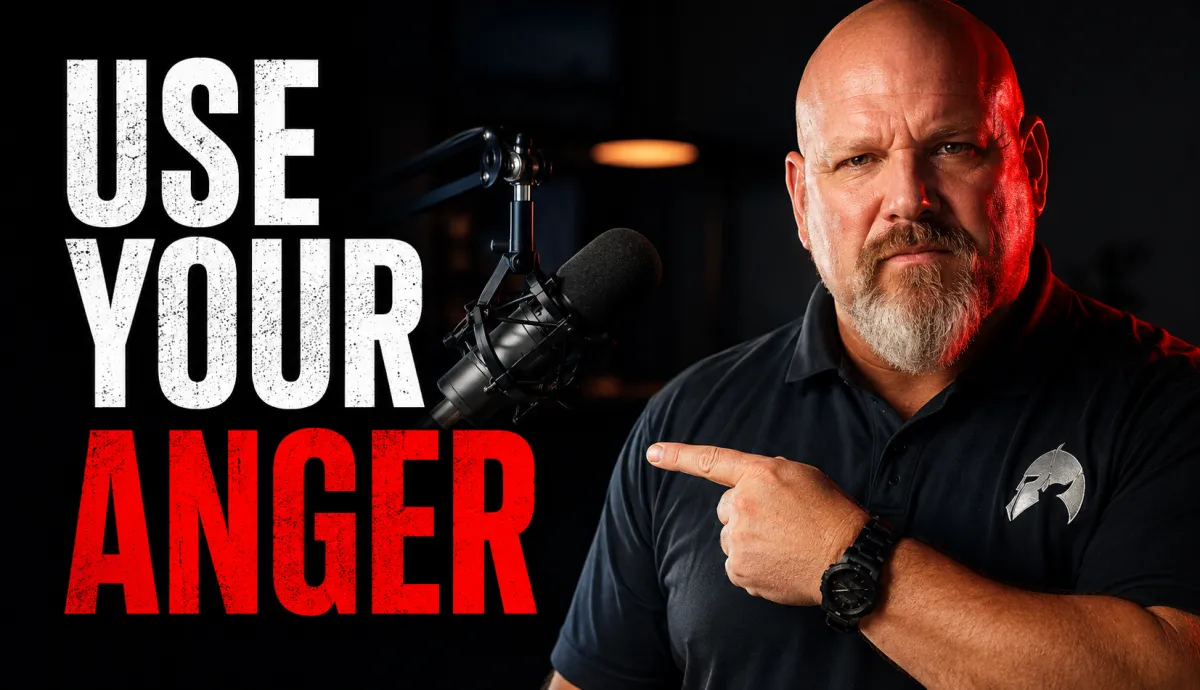
Voisin breaks a man’s life down into five areas: fitness, faith, family, finance, and fun and pictures each one as either an engine pushing him forward or an anchor dragging him down. Most high-achieving men, he’s found, have three strong engines and two anchors quietly sitting on the bottom, and their instinct when life slows down is almost always to add more engines instead of lifting the anchor. He also argues that“decision velocity is greater than decision accuracy,”that perfectionism works like a horizon line the mind invents to help it navigate useful, but never something you can actually reach and that anger isn’t an emotion men should starve into submission. It’s energy that needs a healthy outlet, or it eventually finds an unhealthy one.
This isn’t a takedown of ambition or a call to soften up. It’s a look at why so many capable, accomplished men feel quietly stuck, and a practical map for getting the parts of their life that aren’t working back in motion without blowing up the parts that are.
Who is this episode for?
This episode is for men who’ve hit real success in one area of life, money, career, fitness, while watching another (usually family, faith, or their own sense of fun) quietly fall apart. It’s for guys who recognise the procrastination-perfectionism loop in themselves and want language to explain why it happens. And it’s for therapists and coaches working with high-achieving male clients who present as confident on the surface but are privately wrestling with imposter syndrome, anxiety, or a creeping sense that nothing they accomplish will ever feel like enough.
What is the male ego, and why does it matter for men’s mental health?
In Voisin’s framing, the ego isn’t the colloquial“that guy’s an asshole”version; it’s the conscious mind itself, the sense of self every person has to build between childhood and adulthood to function as an individual. The problem isn’t that men have one. It’s that once it“hardens”into an adult identity, it tends to convince a man that his way of seeing the world is the only way, which is exactly the mindset that later blocks empathy, flexibility, and growth.
How does the male ego trap successful men specifically?
Success reinforces the trap. The more a man’s instincts get proven right in business, the more his mind insists those same instincts must be right everywhere else in marriage, parenting, and friendship. Voisin points out that men can hold up their own hands and never mistake themselves for their hands, yet they constantly mistake themselves for their thoughts. Add a media environment built to let anyone engage only with people who agree with them, and the ego stops being a tool and starts running the show.
What is the “five F’s” framework Voisin uses with high-performing clients?
Fitness, faith, family, finance, and fun. He has men score each area not as right or wrong, but as“working”or “not working” right now, a distinction he says defuses the defensiveness that comes with moral judgment. Most driven men score high on three of the five and have let two quietly drift to the bottom of the boat, and the goal isn’t a bigger engine in the strong areas. It’s lifting the anchors.
Is perfectionism really impossible to overcome, according to this episode?
Voisin reframes it instead of promising to“fix”it. Perfection, he argues, is like the horizon: your mind invents the line where land meets sky to help you navigate, but there’s no actual spot on earth where you can stand and touch it. Useful as a direction, useless as a destination. The move isn’t chasing perfection. It’s getting “powerfully imperfect” and tracking whether you’re improving against your own past benchmark, not an imaginary finish line.
Where can I find Coach Kevin Voisin and the Live Legend coaching app?
Kevin Voisin is active across social media under his name and shares more about his coaching, speaking, and the upcoming Live Legend app @itscoachkevin.com.
Ready to go deeper?Men’s Therapy OnlineoffersIndividualtherapybuilt specifically for men. Also consider joining theMen’s Groupand thefree Slack Communitywhere over 250 men have real conversations about growth, identity, and men’s mental health.
